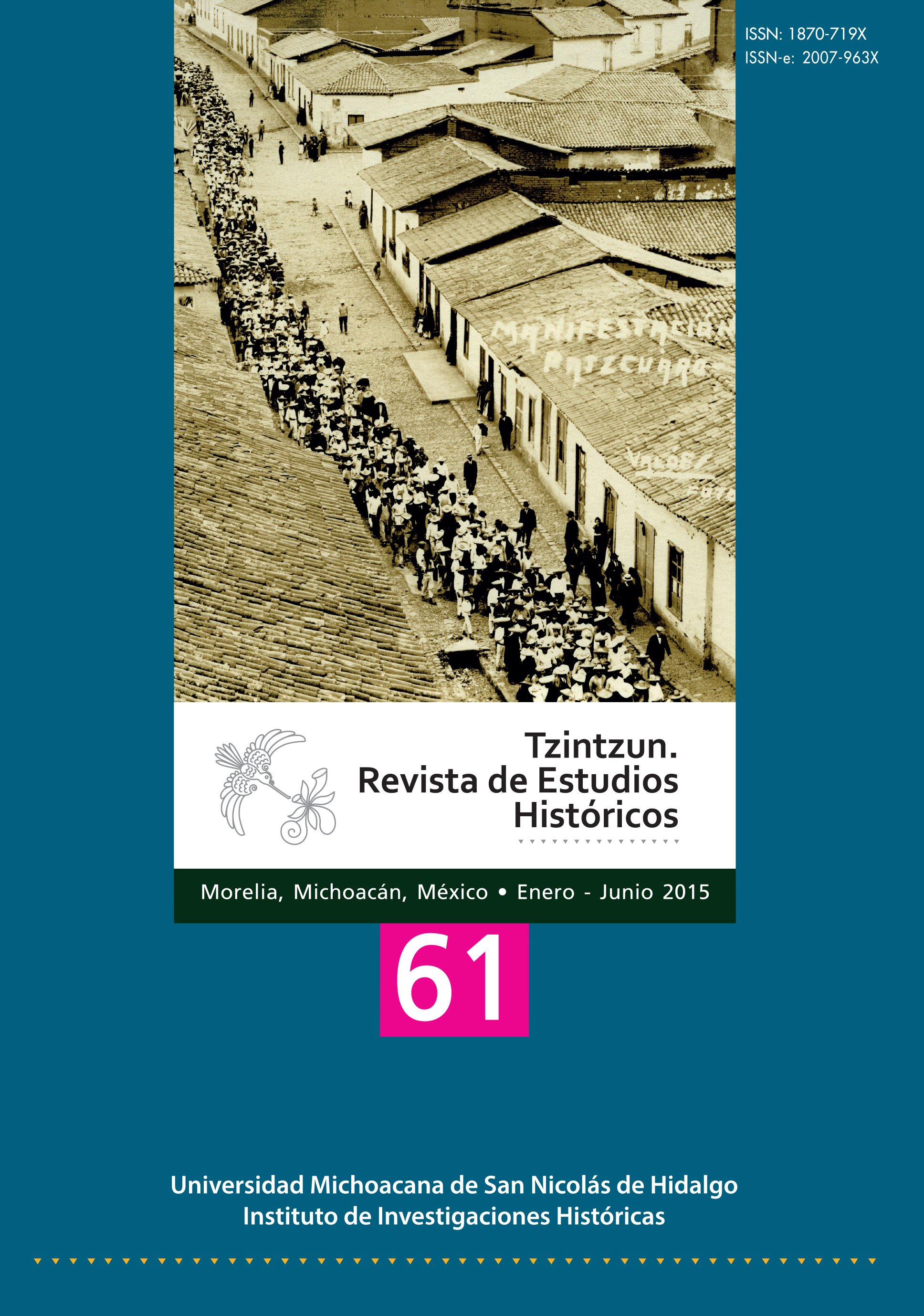
Iglesia, catolicismo popular y Estado: fundamentos socio-históricos de un pueblo michoacano
DOI:
https://doi.org/10.35830/treh.vi61.1494Keywords:
state, church, popular catholicism, Michoacán, agrarismAbstract
During the institutionalization period of the government originating in the
Mexican Revolution, certain social and politican projects were encouraged
which aimed at renewing national society in its broadest sense. In rural areas,
the most important of these projects was to provide people with land. As a
result of this state project, a social identity and rural politics started to emerge.
his process, known as agrarism, faced both wide acceptance and hard
resistance among the population. his paper analyzes and collects historical
facts of key importance in the village of Tiríndaro, Michoacán state, which
show the diferent phases of the arrival and consolidation of the new agrarian
state project at the beginning of the 20th century. It will also shed light on
how disruptive it proved to be in a village which had earlier been characterized
by its industriousness and devoted catholicism. hus, starting out from
the idea that the state and the church are contingent societies, this research
paper sets the premise that the society of Tiríndaro is a product of social, political
and cultural parameters coming from the Catholic church, the national
State and recent actions of a popular catholicism.
Downloads
References